
- Astigmatism causes blurred or distorted vision at all distances due to an irregularly shaped cornea.
- A toric IOL compensates for corneal irregularities, allowing light to focus sharply on the retina.
- The procedure is nearly identical to standard cataract surgery, with precise alignment of the toric lens for optimal correction.
- The ORA System can be used during surgery to confirm lens placement and improve outcomes.
- Toric IOLs are premium lenses with an additional out‑of‑pocket cost, as they are not fully covered by Medicare or insurance.

How much visual freedom do you want to have after cataract surgery? If you have astigmatism and wish to reduce or eliminate your reliance on glasses or contact lenses, a toric lens can help you achieve your vision goals.
A toric intraocular lens (IOL) can kill two birds with one stone, getting rid of cataracts and correcting astigmatism. Keep reading to learn more about astigmatism and whether a toric lens could be the answer to correcting your astigmatism during cataract surgery.
What is Astigmatism?

Usually, the cornea is round, like a basketball. This helps the cornea bend or refract incoming light accurately, allowing it to focus precisely on the retina so you can see clearly. But with astigmatism, the cornea has an irregular shape like a football. The uneven curvature prevents light entering the eye from bending as it should. As a result, light doesn’t focus correctly on the retina, leading to distorted or blurred vision at all distances. Typically, people with astigmatism might also have other refractive errors, such as farsightedness or nearsightedness.
What are the Symptoms of Astigmatism?
Signs and symptoms of astigmatism can include:
- Distorted or blurred vision
- Poor night vision
- Headaches
- Squinting
- Eyestrain
Can a Toric IOL Fix Astigmatism During Cataract Surgery?
A toric IOL is a premium lens specially designed to correct astigmatism. The unique design of a toric IOL compensates for the irregular shape of the cornea that causes astigmatism, allowing light to focus sharply on the retina. The result is sharp, crisp vision. For patients with moderate to severe astigmatism, a toric lens can be an excellent option for reducing astigmatism during cataract surgery.
It can deliver crystal-clear vision, significantly decreasing or eliminating the need for visual aids. Many premium IOLs also come in toric models.
An irregular corneal shape that blurs vision at all distances.
Its special design compensates for corneal irregularities, focusing light precisely.
The lens must be rotated to the correct axis during surgery for optimal correction.
Real‑time measurements confirm alignment and improve outcomes.
What Happens During Cataract Surgery with a Toric IOL?
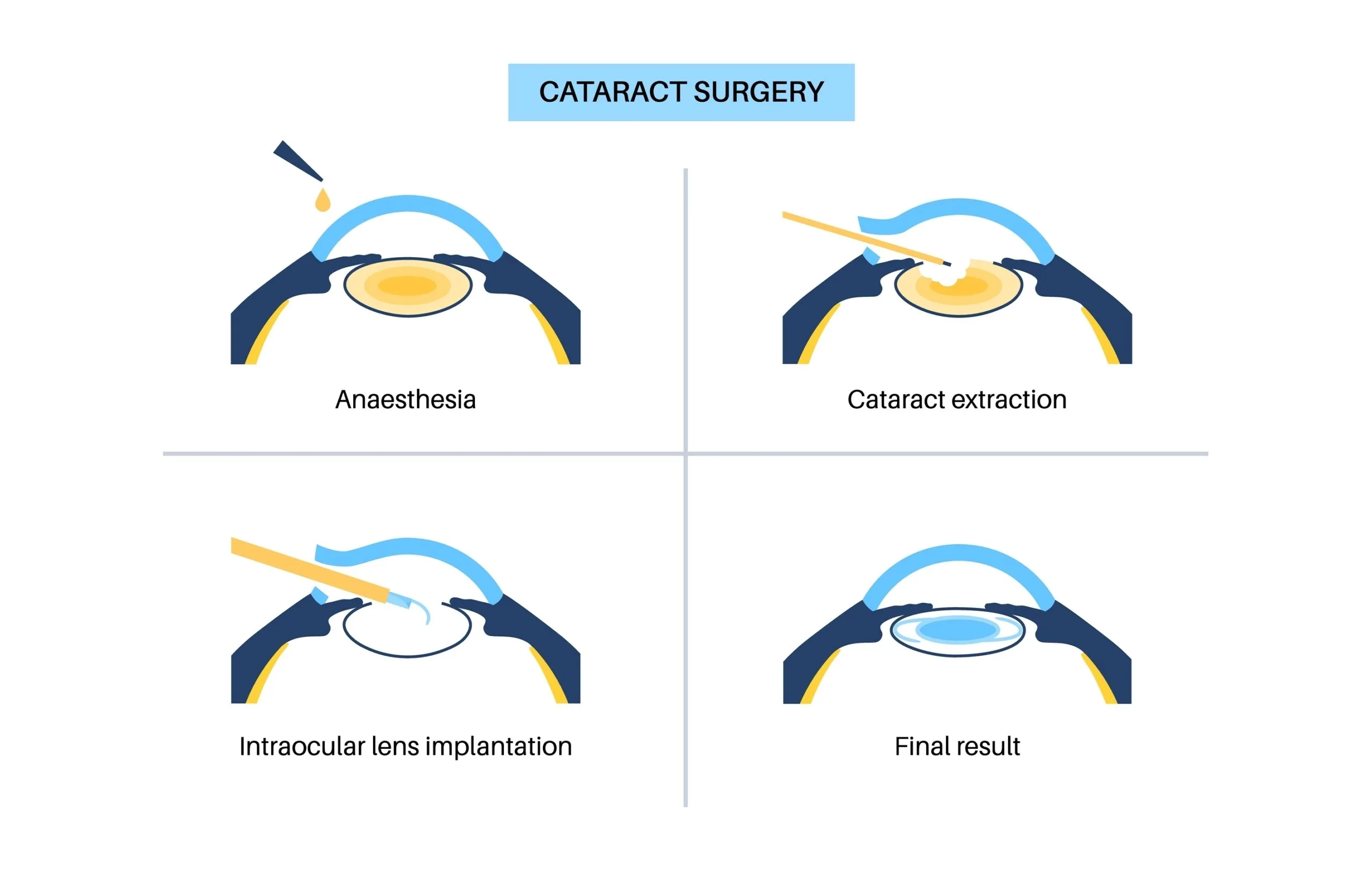
Cataract surgery with a toric lens is basically the same as cataract surgery with other IOLs, with a few crucial differences. Prior to cataract surgery, your cataract surgeon will take a series of measurements. These measurements will allow them to select the most appropriate toric IOL power and the orientation of the implant that may successfully fix your astigmatism. First, numbing eye drops will then be applied so you won’t feel pain during the procedure. You may also be given medicine to help you feel at ease. You’ll remain awake throughout your procedure but only see general movement and lights. You won’t be able to see what the surgeon is doing to your eyes. Next, your cataract surgeon will create a tiny incision in your cornea to reach the lens with a cataract. They’ll break the lens into tiny fragments using ultrasound waves. All the pieces will then be removed with gentle suction. Your cataract surgeon will insert the toric IOL through the same incision. Toric lens implants have special markers on their peripheral showing the correcting axis of the IOL. Once the lens is implanted, your cataract surgeon will rotate the toric IOL so that the special markers on the lens align for optimal astigmatism correction. Using the ORA system, the precision of astigmatism correction considerably improves.
Finally, the incision made is left to heal on its own. It’s so small that it doesn’t require stitches. Cataract surgery takes about 10 to 15 minutes to complete, and you can return home soon after your procedure ends.
What is Recovery Like After Cataract Surgery with a Toric IOL?
Recovery after cataract surgery with a toric IOL is similar to recovery with any other IOL. Following your procedure, you’ll be monitored for around 30 minutes, and then you can go home.
You’ll have an eye shield over the treated eye when you leave. You will continue to wear it when sleeping and napping to protect your eye as it heals. You won’t be able to drive yourself, so have a friend or family member drive you home. Before leaving, your cataract surgeon will provide postoperative care instructions, including resting, limiting physical activity, applying prescribed eye drops, and attending follow-up appointments. Make sure you follow all the instructions to ensure a smooth recovery. During the early stages of recovery, you may experience fluctuating vision as your eye gradually heals. Visual acuity will continue to improve in the weeks following your procedure as your eye adjusts to the new IOL. While most patients notice improved vision shortly after cataract surgery, optimal visual acuity with a toric IOL can take 3 to 4 weeks.
Will You Still Require Visual Aids with a Toric IOL?

Toric lens implants can correct astigmatism and farsightedness or nearsightedness. Depending on which toric IOL you choose, you may be able to reduce your dependence on visual aids after the procedure. If you do need visual aids, however, they likely won’t need to be as strong as before cataract surgery. A toric IOL might also not correct all of your astigmatism, particularly if it’s severe, so you may require corrective lenses. But compared to other IOLs that don’t address astigmatism, a toric lens enables you to see better at all distances without visual aids. Overall, patients usually find a considerable improvement in their vision and a reduced dependence on visual aids after cataract surgery with a toric lens. Many patients go from needing visual aids all the time to only requiring them for up-close tasks.
For cataract patients with astigmatism, a toric IOL can be a life‑changing choice. It corrects the irregular corneal curvature at the same time as your cataract is removed, providing sharper distance vision and often reducing your need for glasses. The ORA System adds an extra layer of precision, confirming that your toric lens is perfectly aligned for the best possible outcome. While toric IOLs are not fully covered by Medicare, many patients find the investment well worth the lifelong improvement in visual quality.
Get Rid of Cataracts and Reduce Astigmatism with a Toric Lens
Cataract surgery with a toric IOL at Desert Vision Center can eliminate cataracts and reduce astigmatism simultaneously. In the hands of an expert surgeon like Dr. Tokuhara, a toric lens can help you achieve greater freedom from glasses or contact lenses.
Are you interested in a toric IOL? Schedule your appointment at Desert Vision Center in Rancho Mirage, CA, today to determine if a toric lens is right for you.
Ready to see clearly without astigmatism?
If you have cataracts and astigmatism, a toric IOL could be your answer. Schedule a consultation with Dr. Tokuhara to find out if you are a candidate and to explore the best toric lens options for your lifestyle.